Buy zhanglei.eu ?
We are moving the project
zhanglei.eu .
Are you interested in purchasing the domain
zhanglei.eu ?
domain@kv-gmbh.de · 0541-91531010
Buy zhanglei.eu ?
How can one show surjectivity?
One can show surjectivity by demonstrating that every element in the codomain has a preimage in the domain. This can be done by showing that for every y in the codomain, there exists an x in the domain such that f(x) = y. In other words, the function "covers" the entire codomain, leaving no elements without a preimage. This can be shown through direct proof, by finding the specific preimage for each element in the codomain, or through a more general argument, such as showing that the function is onto. **
How do you prove surjectivity?
To prove surjectivity, you need to show that for every element in the codomain, there exists at least one element in the domain that maps to it. One way to do this is by taking an arbitrary element in the codomain and finding a pre-image for it in the domain. If you can find a pre-image for every element in the codomain, then the function is surjective. Another approach is to show that the range of the function is equal to the codomain, indicating that every element in the codomain is being mapped to. **


Similar search terms for Surjectivity
Top-Angebote
Products related to Surjectivity:
-
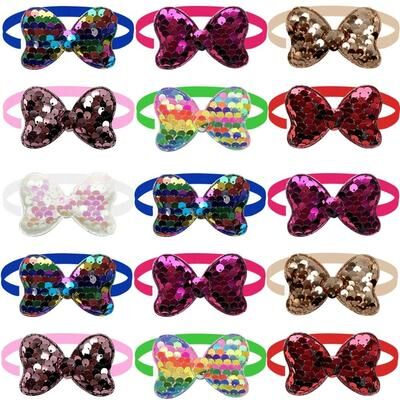
Uplift Essentials Sequin Style Pet Bow Tie Set High Fashion Grooming Accessories For Dogs & Cats (50 Piece Bulk Pack) Sequin Style Pet Bow Tie Set High Fashion Grooming Accessories For Dogs & Cats (50 Piece Bulk Pack)Elevate your pets aesthetic for any special occasion with our Professional Sequin Style Pet Bow Tie Set. Specifically engineered for highvisibility fashion and professional grooming finishes, this 50piece collection features a stunning array of...74,97 $*Shipping: 0,00 $Secure redirect to the provider
-
Fashion Sheath ONOLA Automatic Mechanical Luxury Men Watch For Business And Military Style blackTrue confidence isn't just about what you achieve, but how you command your time along the way. The ONOLA automatic mechanical watch is crafted for the modern man who values precision engineering, rugged durability, and timeless elegance. Whether...94,97 $*Shipping: 0,00 $Secure redirect to the provider



-
How can one check images for surjectivity?
One can check images for surjectivity by examining whether the range of the function covers the entire codomain. To do this, one can analyze the function's output for different input values and determine if every element in the codomain is covered. If the function's image covers the entire codomain, then the function is surjective. Another approach is to use the definition of surjectivity, which states that for every y in the codomain, there exists an x in the domain such that f(x) = y. By verifying this condition for all elements in the codomain, one can determine if the function is surjective. **
-
What is the injectivity and surjectivity of compositions?
The injectivity of compositions refers to the property of a composition of functions where if the composition of two functions is injective, then the outer function is injective. Similarly, the surjectivity of compositions refers to the property where if the composition of two functions is surjective, then the inner function is surjective. In other words, the injectivity and surjectivity of compositions are related to the properties of the individual functions within the composition. **
-
Why do we need injectivity, surjectivity, or bijectivity?
Injectivity, surjectivity, and bijectivity are important concepts in mathematics because they help us understand the relationship between different sets and functions. Injectivity ensures that each element in the domain maps to a unique element in the codomain, which is useful for preventing information loss in functions. Surjectivity guarantees that every element in the codomain is mapped to by at least one element in the domain, ensuring that no information is left out. Bijectivity combines these two properties, providing a one-to-one correspondence between elements in the domain and codomain, making it easier to establish relationships and solve problems in various mathematical contexts. **
-
Is there no injectivity or no surjectivity here?
There is no surjectivity here. Surjectivity means that every element in the codomain is mapped to by at least one element in the domain. In this case, there are elements in the codomain that are not being mapped to by any element in the domain, so the function is not surjective. **


Examine the sets for injectivity, surjectivity, and bijectivity.
The sets can be examined for injectivity, surjectivity, and bijectivity by analyzing the relationship between the elements of the domain and the codomain. Injectivity can be determined by checking if each element in the domain maps to a unique element in the codomain. If there are no two distinct elements in the domain that map to the same element in the codomain, the function is injective. Surjectivity can be determined by checking if every element in the codomain has at least one pre-image in the domain. If every element in the codomain is mapped to by at least one element in the domain, the function is surjective. Bijectivity can be determined by checking if the function is both injective and surjective. If every element in the codomain has a unique pre-image in the domain, and every element in the codomain is mapped to, the function is bijective. **
What methods do you know to prove surjectivity?
One method to prove surjectivity is to show that for every element in the codomain, there exists at least one element in the domain that maps to it. This can be done by explicitly finding the pre-image of each element in the codomain. Another method is to use the concept of range and show that the range of the function is equal to the codomain. Additionally, one can use the contrapositive of the definition of surjectivity, which states that if there exists an element in the codomain that does not have a pre-image in the domain, then the function is not surjective. **
Top-Angebote
Products related to Surjectivity:
-
Multicon Wholesale Hub Cigar Glass On Top Cups Drinkware Glass For Whiskey, Tiki Fashion Tumbler Accessories, Crystal Design Cigar Glass On Top Cups Drinkware Glass For Whiskey, Tiki Fashion Tumbler Accessories, Crystal DesignElevate your sipping ritual with this Drinkware Glass for Whiskey, designed for those who appreciate craftsmanship, style, and indulgence in every detail. This elegant glass combines function and luxury by seamlessly pairing your favorite whiskey...79,97 $*Shipping: 0,00 $Secure redirect to the provider
-
Youfap Market Exquisite Fashion Design Luxury Diamond Encrusted Hip Hop Watch, Perfect Gift For Men And Women, Casual Party Style silverElegant Luxury Meets Stylish Hip Hop Design Introducing the Luxury DiamondEncrusted Hip Hop Watch, a sophisticated blend of opulence and urban flair. Crafted with precision and adorned with dazzling diamonds, this exquisite timepiece makes a bold...64,97 $*Shipping: 0,00 $Secure redirect to the provider
-
Uplift Essentials Sequin Style Pet Bow Tie Set High Fashion Grooming Accessories For Dogs & Cats (50 Piece Bulk Pack) Sequin Style Pet Bow Tie Set High Fashion Grooming Accessories For Dogs & Cats (50 Piece Bulk Pack)Elevate your pets aesthetic for any special occasion with our Professional Sequin Style Pet Bow Tie Set. Specifically engineered for highvisibility fashion and professional grooming finishes, this 50piece collection features a stunning array of...74,97 $*Shipping: 0,00 $Secure redirect to the provider
-
How can one show surjectivity?
One can show surjectivity by demonstrating that every element in the codomain has a preimage in the domain. This can be done by showing that for every y in the codomain, there exists an x in the domain such that f(x) = y. In other words, the function "covers" the entire codomain, leaving no elements without a preimage. This can be shown through direct proof, by finding the specific preimage for each element in the codomain, or through a more general argument, such as showing that the function is onto. **
-
How do you prove surjectivity?
To prove surjectivity, you need to show that for every element in the codomain, there exists at least one element in the domain that maps to it. One way to do this is by taking an arbitrary element in the codomain and finding a pre-image for it in the domain. If you can find a pre-image for every element in the codomain, then the function is surjective. Another approach is to show that the range of the function is equal to the codomain, indicating that every element in the codomain is being mapped to. **
-
How can one check images for surjectivity?
One can check images for surjectivity by examining whether the range of the function covers the entire codomain. To do this, one can analyze the function's output for different input values and determine if every element in the codomain is covered. If the function's image covers the entire codomain, then the function is surjective. Another approach is to use the definition of surjectivity, which states that for every y in the codomain, there exists an x in the domain such that f(x) = y. By verifying this condition for all elements in the codomain, one can determine if the function is surjective. **
-
What is the injectivity and surjectivity of compositions?
The injectivity of compositions refers to the property of a composition of functions where if the composition of two functions is injective, then the outer function is injective. Similarly, the surjectivity of compositions refers to the property where if the composition of two functions is surjective, then the inner function is surjective. In other words, the injectivity and surjectivity of compositions are related to the properties of the individual functions within the composition. **
Similar search terms for Surjectivity
-
Fashion Sheath ONOLA Automatic Mechanical Luxury Men Watch For Business And Military Style blackTrue confidence isn't just about what you achieve, but how you command your time along the way. The ONOLA automatic mechanical watch is crafted for the modern man who values precision engineering, rugged durability, and timeless elegance. Whether...94,97 $*Shipping: 0,00 $Secure redirect to the provider
-
Fashion Sheath Luxury Gold Pearl Rhinestone Bridal Headband Handmade Flower Crown For Weddings, Parties, And Prom Hair Accessories goldTransform your wedding day look with a touch of timeless elegance that captures every light. This exquisite bridal headband features meticulously handwired flowers, lustrous pearls, and shimmering rhinestones designed to make you feel like royalty....49,97 $*Shipping: 0,00 $Secure redirect to the provider
-
Fashion Sheath Luxury Mens Wine Barrel Watch With Luminous Dial And Calendar Sports Design blueElevate your wrist game with a design that refuses to blend into the crowd. This wine barrel watch combines a bold, architectural silhouette with the practical utility of a modern mens luxury sports watch. Crafted for those who appreciate refined...44,97 $*Shipping: 0,00 $Secure redirect to the provider
-
Why do we need injectivity, surjectivity, or bijectivity?
Injectivity, surjectivity, and bijectivity are important concepts in mathematics because they help us understand the relationship between different sets and functions. Injectivity ensures that each element in the domain maps to a unique element in the codomain, which is useful for preventing information loss in functions. Surjectivity guarantees that every element in the codomain is mapped to by at least one element in the domain, ensuring that no information is left out. Bijectivity combines these two properties, providing a one-to-one correspondence between elements in the domain and codomain, making it easier to establish relationships and solve problems in various mathematical contexts. **
-
Is there no injectivity or no surjectivity here?
There is no surjectivity here. Surjectivity means that every element in the codomain is mapped to by at least one element in the domain. In this case, there are elements in the codomain that are not being mapped to by any element in the domain, so the function is not surjective. **
-
Examine the sets for injectivity, surjectivity, and bijectivity.
The sets can be examined for injectivity, surjectivity, and bijectivity by analyzing the relationship between the elements of the domain and the codomain. Injectivity can be determined by checking if each element in the domain maps to a unique element in the codomain. If there are no two distinct elements in the domain that map to the same element in the codomain, the function is injective. Surjectivity can be determined by checking if every element in the codomain has at least one pre-image in the domain. If every element in the codomain is mapped to by at least one element in the domain, the function is surjective. Bijectivity can be determined by checking if the function is both injective and surjective. If every element in the codomain has a unique pre-image in the domain, and every element in the codomain is mapped to, the function is bijective. **
-
What methods do you know to prove surjectivity?
One method to prove surjectivity is to show that for every element in the codomain, there exists at least one element in the domain that maps to it. This can be done by explicitly finding the pre-image of each element in the codomain. Another method is to use the concept of range and show that the range of the function is equal to the codomain. Additionally, one can use the contrapositive of the definition of surjectivity, which states that if there exists an element in the codomain that does not have a pre-image in the domain, then the function is not surjective. **
* All prices are inclusive of VAT and, if applicable, plus shipping costs. The offer information is based on the details provided by the respective shop and is updated through automated processes. Real-time updates do not occur, so deviations can occur in individual cases. ** Note: Parts of this content were created by AI.